Benjamin Franklin's Contributions to Electromagnetism
How Benjamin Franklin's experiments with charge, Leyden jars, lightning rods, and batteries helped shape modern electrical engineering.
Benjamin Franklin's foremost work Experiments and Observations on Electricity (1751) was America's first scientific contribution to the field. He observed several electrical phenomena, from static charges to capacitors, and many of his discoveries held practical importance, even today. Franklin's observations laid the foundations for modern electrical engineering. Today, his experiments are the origin of fundamental concepts. We will examine Franklin's contributions of electromagnetism through his own writings as well as reflect on the significance of his work through the perspective of an electrical engineering student.
Early Capacitors
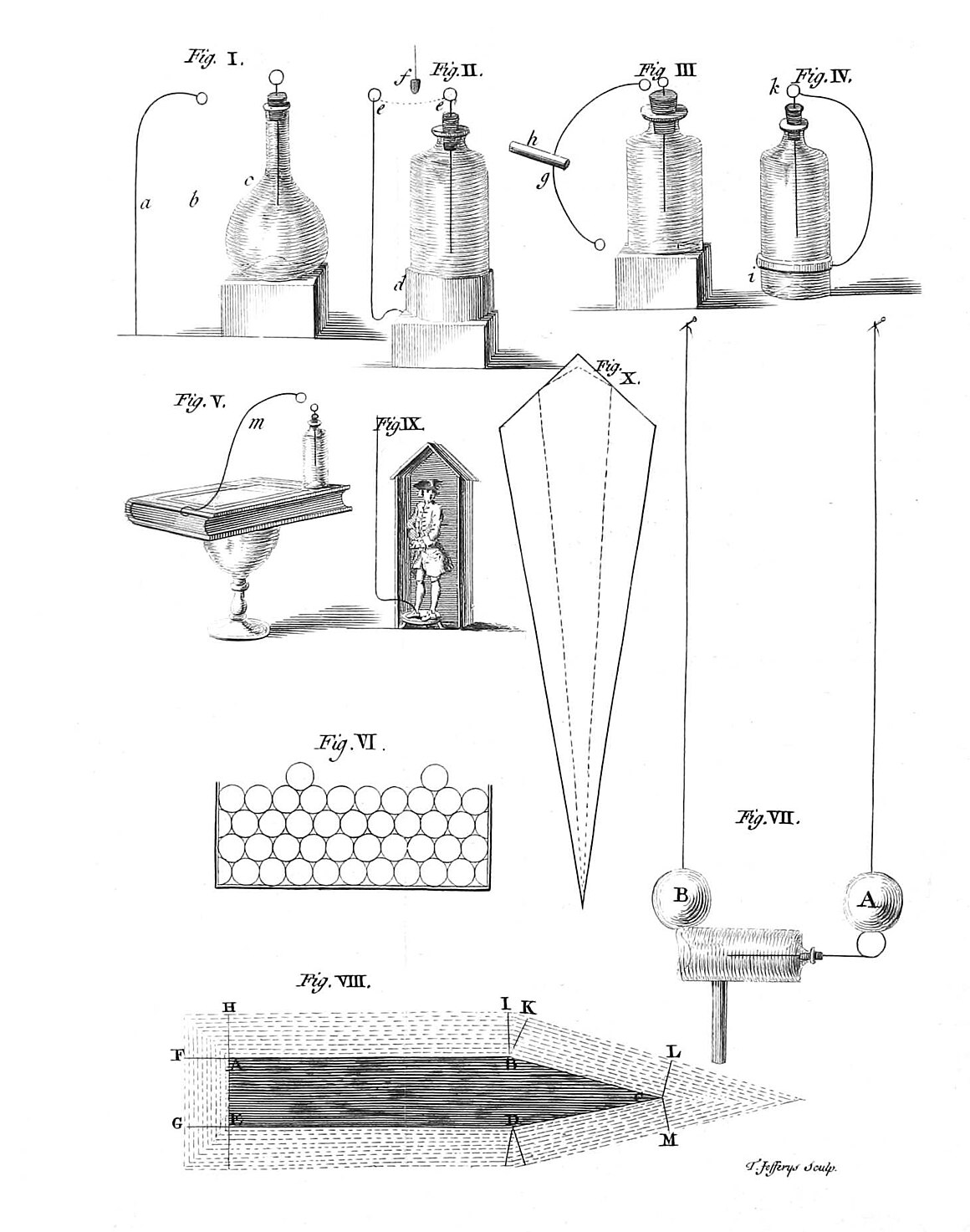 Franklin wrote a series of letters between 1747 and 1750, later published as Experiments and Observations of Electricity. These would serve as his primary accounts of research on the subject. He wrote to his colleague Peter Collinson of the Royal Society, describing in great detail the experiments. Franklin experimented with the Leyden jar, one of the first iterations of what we know today as a capacitor, a system capable of storing static charge.
The Leyden jar consisted of a glass bottle partially filled with water. A wire would run through the stopper into the water. Foil lined the walls of the bottle to pass the charge. The jar is then charged via an electrostatic generator and the inner and outer surfaces could store the equal but opposite charges.
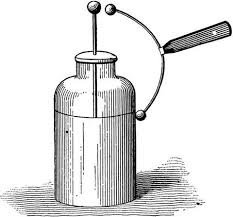
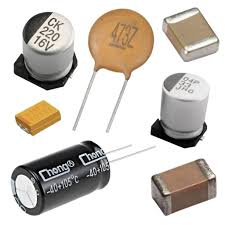
Modern capacitors are the successor of the Leyden, playing the same role in circuitry. They also function as storage for charges, often holding their own electrical energy in an electrical field, consisting of two conductive plates separated by insulating material, as opposed to the inner and outer foil and water of the Leyden jar. In fact, capacitance used to be measured in 'jars' as a reference to the Leyden jar itself.
Although Leyden jars were discovered before Franklin, he would find in his experiments what we now know as the earliest principles of polarity, as well as use the jars in his famous kite experiment.
Charges of Electricity
When investigating Leyden jars, Franklin made a crucial observation: as one end of the jar was charged positively, the other end would be charged negatively. In Letter I, he writes that “at the same time that the wire and top of the bottle…is electrised positively or plus, the bottom of the bottle is electrised negatively or minus, in exact proportion: i.e. whatever quantity of electrical fire is thrown in at top, an equal quantity goes out of the bottom”[[1]](https://en.wikisource.org/wiki/Experiments_and_Observations_on_Electricity#:~:text=2,After%20the).
Electric charge is conserved and transferred, not created or destroyed. Franklin proposed the term positive and negative for the two states, and that electricity flowed as a single fluid with charge. Today, we understand electricity as the flow of electrons as negatively charged particles through conductive materials flowing from negative terminals to positive terminals. This is the inverse of what Franklin proposed, but by far his was our earliest definition of the phenomena. Nonetheless, the idea that electricity is a single fluid with a fixed total quantity that behaves under a polar charge was profound, simplifying scientists' understanding of electrical phenomena and a direct forerunner of the modern principle of charge conversation.
Above we see both definitions of the flow of electricity. The conventional current flow is what Benjamin Franklin discovered, current flowing from positive to negative. The scientific understanding is that electrons are actually flowing from the negative to the positive, since electrons are negative themselves. This caused a lot of confusion for me when I was first getting into electronics (thanks Franklin).
The Lightning Rod and the Kite Experiment
Franklin also wrote about how electricity behaves in conductors and insulators. He found that thinner, sharper physical objects discharged electricity in a specific manner to larger, more blunt objects. To cause a spark, needles could dissipate charge at a smaller distance, creating a spark with greater ease then larger rods. Adding to his Law of Electricity, he deduced that sharper points increase the power of conduction and induction. This phenomena is observed in lightning. In thunderstorms, lightning has a greater likelihood striking pointed spires or a single tree. Sharp points concentrate electrical charge, and this deduction lead to one of Franklin's greatest inventions: the lightning rod.
In 1750, Franklin proposed that a metal rod close to a thundercloud would draw the charge from the cloud. At a smaller scale, needles drew electricity from an charged sphere [[2]](https://physicstoday.aip.org/features/benjamin-franklin-and-lightning-rods#:~:text=Franklin%20was%20not%20the%20first,would%20protect%20against%20lightning%20damage).
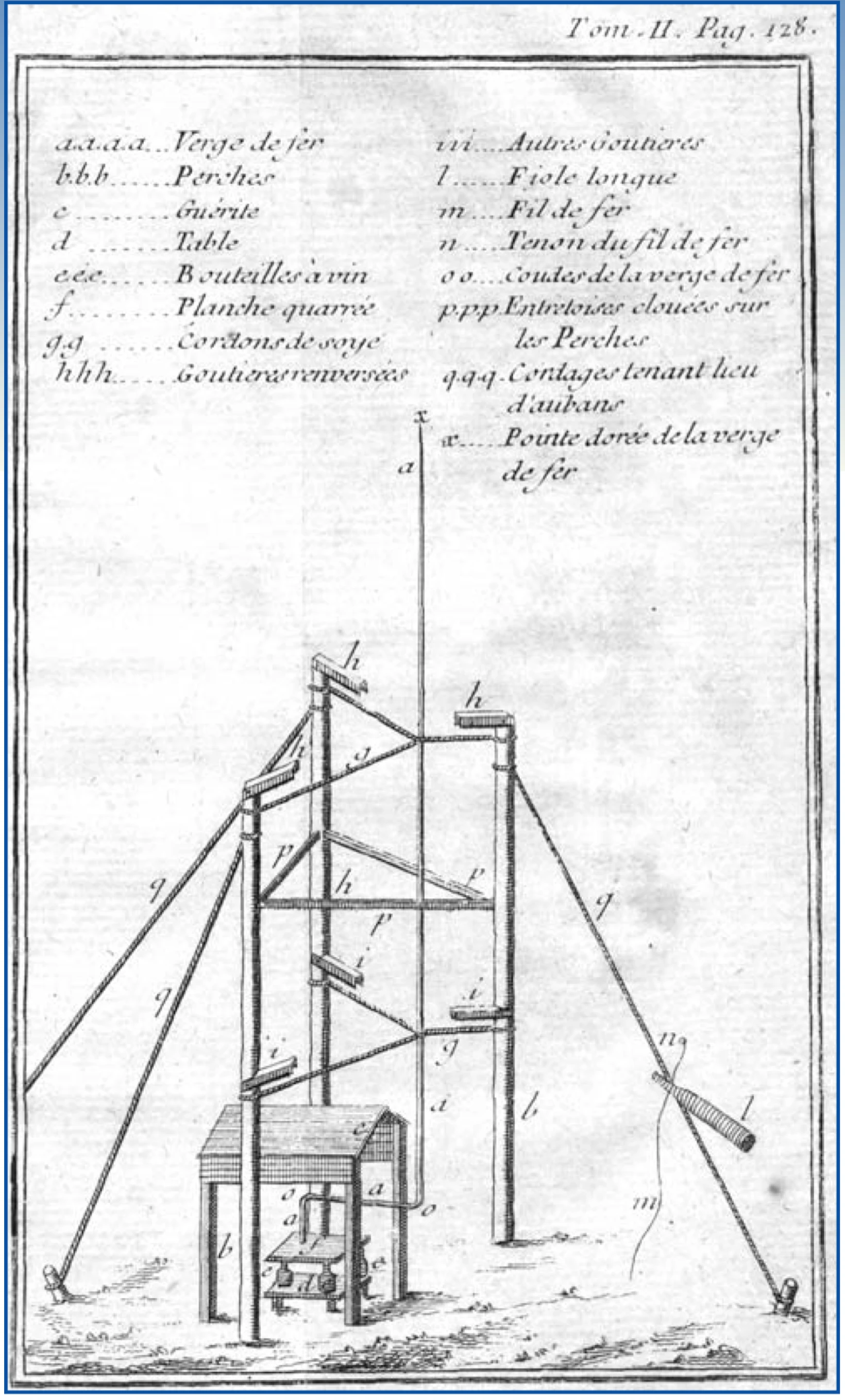
Lacking a steeple tall enough in Philadelphia to test his theory, he devised an ingenious method. In June of 1752, he flew a kite into a thunderstorm, using a hemp string that would serve as a conductor when soaked with rain. A key was attached with an insulating silk ribbon to hold it fast. According to Franklin’s own description (published in the Pennsylvania Gazette), “As soon as any of the Thunder Clouds come over the Kite, the pointed Wire will draw the Electric Fire from them, and the Kite, with all the Twine, will be electrified… and when the Rain has wet the Kite and Twine… you will find it stream out plentifully from the Key on the Approach of your Knuckle…. thereby the Sameness of the Electric Matter with that of Lightning [is] compleatly demonstrated.”[[3]](https://fi.edu/en/science-and-education/benjamin-franklin/kite-key-experiment#:~:text=As%20soon%20as%20any%20of,and%20thereby%20the%20Sameness%20of).** Charge traveled down from the cloud through the kite's string, throwing sparks. Franklin charged a Leyden jar with the kite and storm cloud. As theatrical as it sounds, this experiment showed conclusively that lightning is made of the same "electric matter" as sparks. It is worth noting that Benjamin Franklin was actively avoiding getting struck by lightning. Rather, he was drawing the ambient charge from the clouds. This was a milestone and answered one of the age old questions of natural science: the matter of lightning.
Before he began the kite test, in Letter V (1750), he theorized that if electricity and lightning were the same, a tall, grounded, metal rod could attract lightning away from buildings. He wrote: “may not the knowledge of this power of points be of use to mankind, in preserving houses, churches, ships, &c. from the stroke of lightning, by directing us to fix on the highest parts of those edifices, upright rods of iron… Would not these pointed rods probably draw the electrical fire silently out of a cloud before it came nigh enough to strike, and thereby secure us from that most sudden and terrible mischief?”[[4]](https://en.wikisource.org/wiki/Experiments_and_Observations_on_Electricity#:~:text=its%20fire%20it%20cannot%2C%20and,enough%20to%20strike%2C%20and%20thereby)**
As electricity takes the path of least resistance, a lightning rod can be used as a conductor to safely dissipate the flow somewhere grounded. The lightning rod took off, and Franklin installed such rods at his own house as well as several buildings in Philadelphia from 1752-53. Reports showed that the lightning rods indeed provided protection [[5]](https://physicstoday.aip.org/features/benjamin-franklin-and-lightning-rods#:~:text=In%20the%201753%20issue%20of,protecting%20houses%20from%20lightning%20damage). This is one of the earliest practical applications of electrical engineering as the invention saved countless buildings and people from the risk of fire and electric shock.
Batteries
Another one of Franklin's innovations was the concept of the "battery" in the electrical context. In 1759, he connected several Leyden jars in series so that they'd store a larger charge. He called his capacitor bank an "electrical battery", using the analogy of a battery of canon [[20]](https://physicstoday.aip.org/features/benjamin-franklin-and-lightning-rods#:~:text=the%20conductors%20that%20are%20inside,large%20batteries%20to%20simulate%20the). Franklin found that several jars discharged together had a stronger electrical effect than a single jar. In electrical engineering, this concept is understood as the principle of increasing capacitance. Charging and discharging were used to describe the accumulate and releases of charge in Leyden jars. He correctly inferred the charges in the Leyden jar resides in the glass itself (the dielectric) and not the metal coatings, what would soon to be recognized as the concept of dielectric insulation [[22]](https://physicstoday.aip.org/features/benjamin-franklin-and-lightning-rods#:~:text=In%20his%20third%20letter%2C%20,glass%20sandwiched%20between%20thin%20lead).
Franklin's Legacy in Modern Electrical Engineering
As an electrical engineering student, many of the fundamental concepts I learned trace directly back to Franklin's discoveries. Labeling charges as positive and negative has been used universally throughout electronics, a concept Franklin derived. Although the convention of "positive" charge is arbitrary, the fundamental concept of two opposing polarities was solidified by Franklin. The principle of charge conservation is not a foundational law of physics, underlined by Kirchoff's Current Law in circuit theory.
Batteries as the connection of several charged storage devices was a predecessor to today's combined cells in modern power sources. Just as Franklin wired several Leyden jars together, we select desired voltages and capacitance. Grounding as the flow of charge with a path of return or grounding connection was a phenomena Franklin observed. The lightning rod itself remains vital, with modern lightning protection integrated in today's buildings, transmission lines, and aircrafts.
Moreover, Franklin had an ethical outlook on technology. He explicitly wanted his discoveries to benefit humanity, freely sharing his findings to the public and other scientists, refusing to patent the lightning rod, and maintaining in ethos of open science and human welfare throughout his life. We owe a historical debt to pioneers like Franklin and the groundwork they lay for us today.
Sources
- Franklin, B. (1751). Experiments and Observations on Electricity, made at Philadelphia in America. (Letters I–V to P. Collinson[[1]](https://en.wikisource.org/wiki/Experiments_and_Observations_on_Electricity#:~:text=2,After%20the)[[3]](https://fi.edu/en/science-and-education/benjamin-franklin/kite-key-experiment#:~:text=As%20soon%20as%20any%20of,and%20thereby%20the%20Sameness%20of)[[4]](https://en.wikisource.org/wiki/Experiments_and_Observations_on_Electricity#:~:text=its%20fire%20it%20cannot%2C%20and,enough%20to%20strike%2C%20and%20thereby).
- Krider, E. P. (2006). “Benjamin Franklin and Lightning Rods.” Physics Today, 59(1), pp. 42–48[[2]](https://physicstoday.aip.org/features/benjamin-franklin-and-lightning-rods#:~:text=Franklin%20was%20not%20the%20first,would%20protect%20against%20lightning%20damage) [[5]](https://physicstoday.aip.org/features/benjamin-franklin-and-lightning-rods#:~:text=In%20the%201753%20issue%20of,protecting%20houses%20from%20lightning%20damage)[[20]](https://physicstoday.aip.org/features/benjamin-franklin-and-lightning-rods#:~:text=the%20conductors%20that%20are%20inside,large%20batteries%20to%20simulate%20the)[22]*](https://physicstoday.aip.org/features/benjamin-franklin-and-lightning-rods#:~:text=In%20his%20third%20letter%2C%20,glass%20sandwiched%20between%20thin%20lead).